Sustainable Fashion Design: Career Scope in India
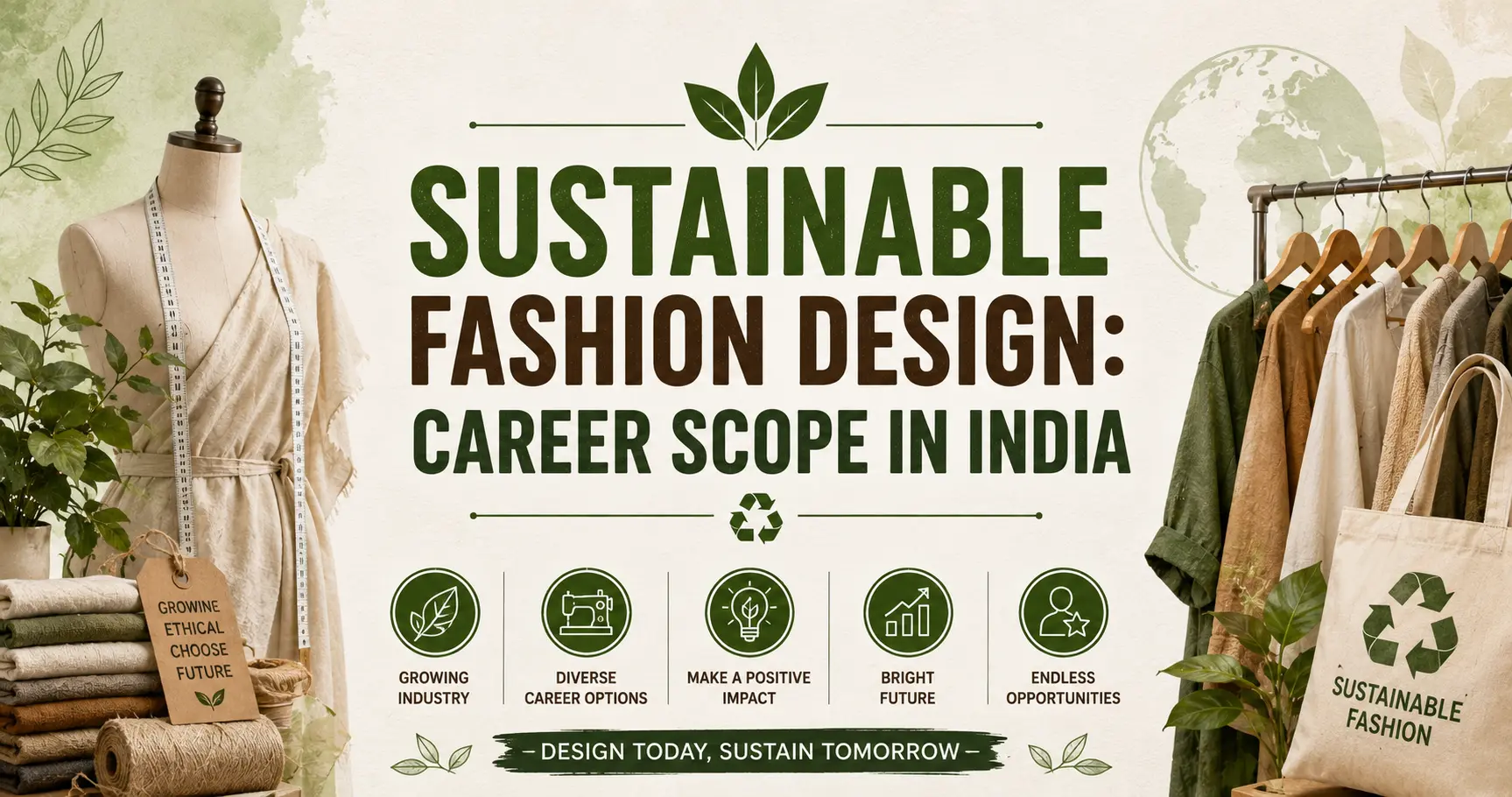
Sustainable Fashion Design: Career Scope in India
Fast fashion built the industry we know today, but it’s not where the industry is headed anymore. Consumers, especially Gen Z, are asking harder questions about where their clothes come from and what happens to them after. That shift has opened a genuine career lane for designers who understand sustainability — not as a buzzword, but as a design skill. Here’s what that career path actually looks like in India right now.
Why Sustainable Fashion Isn’t Just a Trend
Indian fashion brands, both established labels and new-age D2C companies, are under growing pressure to reduce waste, source responsibly, and prove their environmental claims. This isn’t limited to niche eco-brands anymore — mainstream fashion houses are hiring for sustainability-focused roles because customers and export markets are demanding it.
What Does a Sustainable Fashion Designer Actually Do?
The role goes beyond just picking “eco-friendly fabric.” It typically involves:
- Selecting low-impact, biodegradable, or recycled materials without compromising design quality
- Designing for longevity — garments meant to last, not just trend-cycle fast
- Understanding zero-waste pattern cutting to minimize fabric wastage during production
- Working with local artisans and traditional textile techniques that are inherently sustainable
- Navigating certifications and supply chain transparency for brand credibility
Career Roles in This Space
Sustainability in fashion isn’t a single job title — it’s a skill set that opens doors across several roles:
- Sustainable Fashion Designer: Designing collections with eco-conscious materials and processes
- Textile Sustainability Consultant: Advising brands on sourcing and production choices
- Sustainability Coordinator/Manager: Overseeing a brand’s environmental commitments end-to-end
- Upcycling & Circular Design Specialist: Turning existing materials or deadstock into new products
- Entrepreneur: Many designers are launching their own slow-fashion or upcycled clothing labels
Skills You Need to Build
Beyond core fashion design training, this space rewards designers who understand fabric science, supply chains, and consumer psychology around conscious buying. Hands-on exposure to traditional Indian textile crafts — handloom, block printing, natural dyeing — is a genuine advantage, since these techniques are naturally lower-impact and deeply valued in the sustainable fashion space.
Is There Real Demand for This in India?
Yes. India’s textile and apparel export market is increasingly shaped by international sustainability standards, and domestic consumers are becoming more selective too. Brands that can’t demonstrate sustainable practices risk losing both export contracts and younger, values-driven customers — which is exactly why this skill set is becoming a hiring priority, not an afterthought.
Want to build a foundation in fashion design that lets you specialize in sustainable practices later? Explore FIDA’s Fashion Design programs or get in touch to learn more about our curriculum.
FAQs
Is sustainable fashion design a real career, or just a trend?
It’s a genuine and growing career path, driven by both consumer demand and export market requirements.
Do I need a separate course for sustainable fashion design?
A core fashion design education builds the foundation; sustainability knowledge can be layered on through specialization and industry exposure.
What industries hire sustainable fashion designers in India?
Fashion labels, D2C apparel brands, textile export houses, and sustainability consulting firms.
Is upcycling part of sustainable fashion design?
Yes, upcycling and circular design are core techniques within the sustainable fashion space.
Can I start my own sustainable fashion brand after graduating?
Yes, many designers launch independent slow-fashion or upcycled clothing labels after building foundational design skills.