Design Thinking Schools in Bangalore: Syllabus, Fees, and Career Opportunities Explained
Design Thinking ## The Bangalore Blueprint: Unlocking Your Future
Have you ever found yourself standing at the crossroads of your career peering into the swirling mist of “what’s next”? Maybe you’ve heard the whispers of “”—a powerful approach to problem-solving that’s transforming industries worldwide—felt and a spark curiosity of. But then , perhaps, a flood of questions followed: What exactly is it?How do I get started? And where in the bustling innovative city of Bangalore can I truly learn it?
If that sounds like you , then welcome! You’ve landed in the right place . As someone who’navigated s the exciting sometimes overwhelming, world of design and innovation I that understand hesitation initial. My own journey began with a similar sense of wonder,fascinated by how some people seemed to effortlessly craft solutions that truly resonated with users.It wasn’t magic; it was . And today,I’m passionate about demystifying this field, especially for budding enthusiasts like you.
Bangalore,often hailed as India’s Silicon Valley is a vibrant hub brimming with opportunities and institutions dedicated to nurturing the next generation of innovators . It’s a fantastic place embark to your on journey. This comprehensive guide isn’t just about listing schools; it’s about unfolding a map to your future, explaining the core of a what good course Bangalore offers the investment involved, and the incredible career paths that await. We’re going to dive deep ,armed with insights gleaned from research , industry trends and a genuine desire provide to you with truly valuable actionable information . Let’s pull back the curtain and illuminate your path forward.
—
Is Just Another Buzzword Or A Real Game-Changer?
You might hear “” thrown around in boardrooms and startup incubators making it sound like the latest corporate jargon . But let me assure you, it’s far more profound than a passing fad.its At heart, is a human-centered approach innovation to tackles that complex problems by prioritizing empathy for the user fostering creative ideation,and embracing iterative prototyping and testing.Think of it as a disciplined way to unlock creativity and systematically at arrive solutions that are not just feasible and viable but also genuinely desirable for the people they serve.
In a world craving genuine solutions and meaningful experiences this methodology has become indispensable. From tech giants innovating new user to interfaces healthcare providers redesigning patient journeys offers a framework to navigate ambiguity,understand unmet needs, and build solutions that truly make an impact . It’s about moving beyond assumptions getting your hands dirty with experimentation , and learning from quickly failures . Mastering this process isn’t just about acquiring a skill; it’s about cultivating a mindset that empowers you to approach challenge any with creativity resilience,and a deep understanding of human needs.
—
Where Do Dreams Take Root? Navigating Bangalore’s Landscape.
Bangalore , with its pulsating energy and thriving innovation ecosystem,offers a rich tapestry of options for aspiring design thinkers. You’ll find everything from executive programs at leading management institutes to specialized diplomas at dedicated design academies and focused workshops offered by private training providers. Each type of institution brings its own flavor and focus to a course Bangalore has to offer.
For instance , some prominent universities and business schools integrate into their executive education or MBA programs, often emphasizing its application in strategy management and product development. Then there are specialized design institutes that offer more immersive ,project-based learning, sometimes leading to postgraduate diplomas or with certificates a strong focus on practical application and portfolio building .training Corporate arms and independent consulting firms also conduct shorter intensive workshops tailored for professionals seeking to quickly upskill .The key is understanding your learning style , career goals and the depth of knowledge you seek to gain before choosing your crucible of innovation.
—
Unpacking the Blueprint: What Will Actually You Learn?
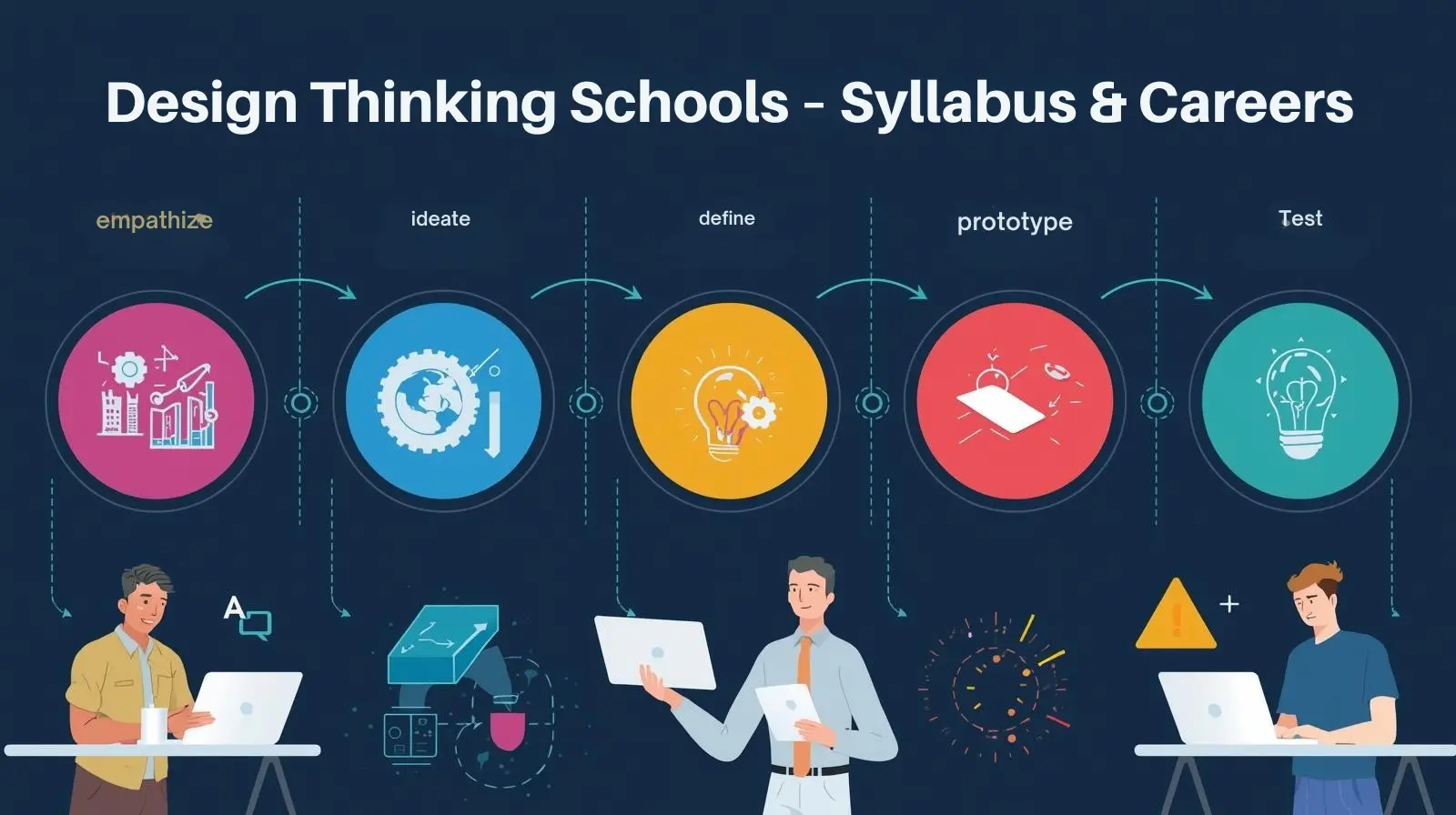
So you’re ready roll to up your sleeves – but what exactly will you find in the “syllabus” for a course Bangalore offers? While specific curricula vary, most robust programs are structured around the core phases of the process:
Empathize: You’ll learn powerful techniques for understanding users – observational studies, in-depth interviews empathy mapping. It’s about stepping into their shoes, hearing their untold stories and uncovering latent needs. Define: How do you translate raw insights into a clear actionable problem statement? This phase teaches you to synthesize research identify patterns and articulate the challenge from the user’s perspective setting the stage for focused innovation. Ideate: Prepare for a burst of creativity!You’ll explore brainstorming techniques , mind mapping,SCAMPER, and other methods to generate a wide range of potential solutions encouraging divergent thinking and pushing beyond the obvious . Prototype: This is where ideas taking start tangible form .You’ll learn to create low-fidelity prototypes – anything from paper mockups and storyboards to digital wireframes – allowing you to quickly visualize and test concepts without significant investment. Test: The final, crucial step putting is your prototypes in front of real users to gather feedback, learn what works (and what doesn’t) ,and iterate.This iterative of cycle building testing, and refining the is heartbeat of Thinking Design.
Beyond these core phases many programs also delve into specific tools like user journey mapping,service blueprints, value proposition canvases ,and introduce concepts like agile methodologies and lean startup principles all designed to equip you with holistic a problem-solving toolkit. You’ll often work on real-world projects, sometimes with industry partners,allowing you to build a practical portfolio that showcases your newfound skills.
—
The Investment in Innovation: the Understanding Financial Picture.
Let’s talk numbers . Investing in a course Bangalore is an investment in your future and like any valuable investment,the cost can vary significantly. You might encounter fees ranging from a few thousand rupees for a short introductory workshop (typically 2-3 days) to several lakhs for comprehensive postgraduate diploma programs that span several months to a year.
What influences this financial spectrum? Factors include the institution’s reputation (a leading university often commands higher fees) the duration and depth of the program the experience and caliber of the faculty the facilities provided,and whether it culminates in a recognized certification.Some programs might offer flexible payment options , scholarships ,or even corporate sponsorship opportunities .It’s crucial to look beyond the sticker price consider and the long-term value: the quality of the curriculum , the industry connections you’ll make the practical experience gained, and ultimately the doors it will open for your career.Think of it not as an expense but as planting a seed for significant professional growth.
—
Beyond the Classroom: Awaits What You After Certification?
One of the most exciting aspects completing of a course Bangalore is the sheer breadth of career opportunities that become accessible. isn’t confined to a single job title; it’s a versatile superpower that enhances roles across various industries.You’re not just learning to design; you’re learning to innovate.
You could find yourself stepping into roles like:
UX Designer/Researcher: Crafting intuitive and delightful user experiences for digital products. Service Designer: Redesigning entire service experiences from banking to healthcare making them more seamless and user-friendly . Innovation Consultant/Strategist: organizations Guiding through complex challenges,helping them foster a culture of innovation . Product Manager/Owner: Leading the development of new products ensuring they meet user needs and business goals . Business Analyst: Applying human-centered approaches to analyze business processes identify and areas for improvement .
Industries actively seeking Design Thinkers are diverse ,spanning technology (startups to MNCs) finance healthcare e-commerce, education and even government sectors .The ability to empathize,define problems clearly, ideate creatively and test rapidly is highly valued by employers looking for adaptable problem-solvers who can drive meaningful change. You’re not just getting a certification; you’re gaining a competitive edge in a rapidly evolving job market .
—
Making Your Mark: How to Choose the Right Course in Bangalore.
With so many choices how do you pick the “one”? This is where your personal research and introspection become paramount.Don’t just follow the crowd; find the program that truly aligns with your aspirations.
Start by clearly defining your goals: Are you looking for a career transition, a skill upgrade within your current role or a deep dive into a specific design domain ? Then consider the following:
1 . Curriculum & Faculty: Does the syllabus excite you? Are the seasoned instructors practitioners with real-world experience ? Look for a strong emphasis on hands-on projects and industry case studies. 2. Learning Methodology: Do you thrive in intense short workshops, or prefer a longer, more structured program? Is the learning highly collaborative and experiential? 3 . Industry Connections & Placements: Does the institution have strong ties with local industries? Do they offer career support , networking events or placement assistance ? Alumni networks can be invaluable. 4.Reviews & Reputation: What do current and former students say ?Look for testimonials social presence media and independent reviews. 5 .Location & Logistics: Is the campus easily accessible? Does the schedule fit your current commitments? 6. Budget: While you’ve understood the range, ensure the chosen program fits your financial plan .
Visiting campuses attending open houses,and even reaching out to alumni on LinkedIn can provide invaluable insights . Remember , best the course Bangalore has to offer for someone else might not be the best for you . Trust your gut do your homework, and choose wisely.
—
Your Journey Awaits!
Stepping into the world of is gaining like a new pair of glasses – suddenly, you see problems not as roadblocks but as opportunities for human-centered innovation. Bangalore with its dynamic energy and plethora of learning institutions truly is a fertile ground for cultivating these skills.
From understanding the fundamental phases and the practical curriculum you’ll encounter, to navigating the investment and visualizing the exciting career landscape we’ve walked through the essential blueprint for your journey. The path becoming to a Design Thinker is one of continuous learning empathy, and creative problem-solving .It’s challenging , rewarding and incredibly impactful .
So are you ready to embark on this transformative journey ? The future of innovation is human-centered and it’s waiting for you. Start exploring today, connect with the vibrant design community in Bangalore ,and prepare to design a future that’s not just functional, but truly meaningful.
—
[“” “Bangalore Courses” “Career Opportunities” “Innovation” “UX Design” “Product Management” “Syllabus” “Course Fees” , “Design Schools” “Beginner Guide”]